Verify Before You Click: Stop Delivery Smishing
· by Spicy Stromboli · smishing, delivery-scams, cybersecurity, link-analysis, phishpond, safe-browsing
-
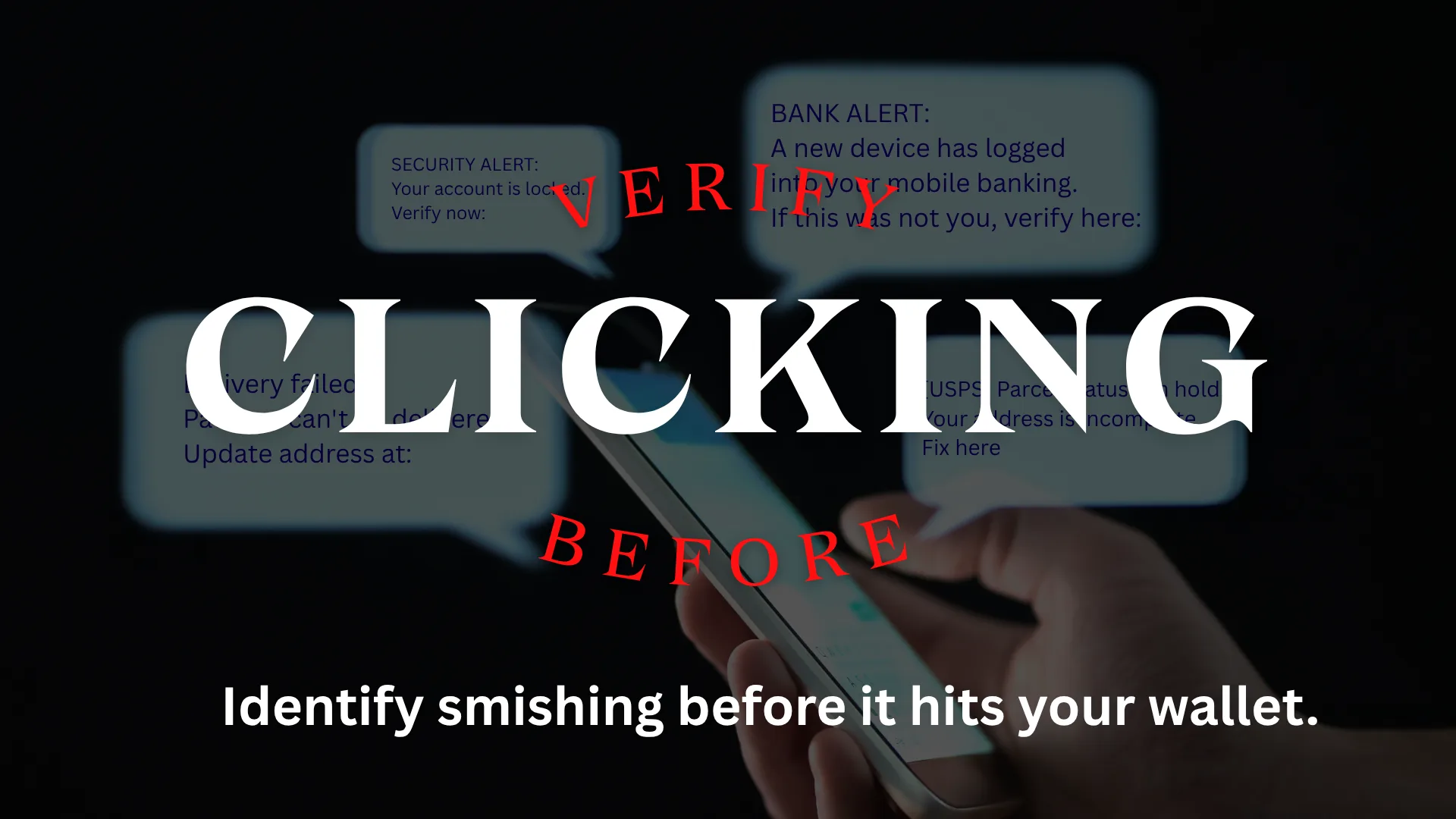
The “Package Held at Warehouse” scam is a widespread smishing attack where victims receive a text claiming a delivery failed due to an “incomplete address.” These messages mimic official carriers like the USPS or FedEx. In 2026, scammers use AI to create unique, believable domains that bypass mobile filters. To stay safe, avoid clicking the link. Verify your tracking number on the official carrier site or use phishpond.io to analyze the URL for hidden malicious code.
Your phone vibrates on the desk for the tenth time today. You look down and see the same message you saw yesterday, and the day before that. It claims to be from the postal service, telling you that a package is being held at a warehouse because your address is incomplete. It is a persistent, annoying, and highly effective piece of social engineering that has become the dominant form of mobile fraud in 2026.
Most of us have reached a point of “notification fatigue.” We are so used to tracking numbers and delivery updates that we stop scrutinizing the source. This is exactly what the attackers are counting on. They are not looking for a complex technical loophole in your phone’s software. They are looking for that one moment when you are too busy to notice that the link in the text is not quite right. That manufactured sense of urgency is the real weapon — our piece on why “urgent” is the most dangerous word in your inbox explains the cognitive mechanism behind why it works on everyone.
The 2026 Smishing Upgrade
The “incomplete address” lure is not new, but the way it is being delivered has changed significantly over the last year. In the past, you could usually spot a scam because the text was full of broken English or bizarre characters. Today, scammers are using generative AI to craft perfectly punctuated, professional messages that vary slightly for every recipient. This makes it much harder for mobile carriers to use “keyword blocking” to stop the texts before they reach you.
According to recent data from the fbi internet crime complaint center, smishing (SMS phishing) now accounts for a massive portion of reported identity theft cases. These messages often use “Look-alike” domains that are purchased just minutes before the texts go out. By the time a security company flags the domain as malicious, the scammer has already moved on to the next one. The same cloaking and asymmetric delivery techniques that defeat email gateways are now applied to SMS infrastructure — our guide to AI-augmented phishing obfuscation explains how this evasion works at a technical level.
How the “Warehouse” Trap Closes
The goal of this scam is rarely to steal your two dollar “re-delivery fee.” That small charge is just a smokescreen. The real prize is your credit card data and your personal identity information.
When you click the link in the text, you are taken to a pixel-perfect clone of a site like the USPS or UPS. The page will ask you to “update” your address, which gathers your physical location. Then, it moves to the payment page. Once you type in your card number, expiration date, and CVV code, that data is instantly sent to a private server. Within minutes, your card can be used for high-value purchases or sold on a dark web marketplace.
Why the “Unsubscribe” Option is a Lie
Many of these texts include a line that says “Reply 1 to exit” or “Stop to opt out.” This is a secondary trap. When you reply to a scam text, you are confirming to the attacker that your phone number is active and that a real human is reading the messages. This makes your number much more valuable to other scammers, and you will likely see an immediate increase in the amount of spam calls and texts you receive.
The safest way to handle these messages is to ignore them entirely. If you are genuinely worried that you might have a package waiting, there is a much safer way to check than clicking a random link sent from a strange area code.
How to Verify a Delivery Safely
In a world where every text looks official, you need a process that does not rely on your eyes alone. Here is the safest way to handle a “delivery alert” in 2026.
1. Go to the Source
If you receive a text about a package, do not touch the link. Instead, open your browser and manually type in the carrier’s website, such as
usps.comorfedex.com. If you have a real tracking number from a recent purchase, enter it there. If the tracking number in the text does not work on the official site, you know for a fact that the text was a scam.2. Report to 7726
You can help the community by reporting these numbers to your mobile carrier. Forward the scam text to 7726 (which spells “SPAM”). This helps carriers identify the patterns of these AI-generated attacks and block the sender’s infrastructure more quickly.
3. Use an Analysis Tool
If you are curious about where a link goes but do not want to risk your device, use phishpond.io. Our tool allows you to paste a suspicious URL into a protected environment. We analyze the “redirect chain” to see where the link actually ends up. Often, a link that looks like a tracking page is actually bouncing through three different countries before landing on a credential-harvesting site. By using a scanner, you can see the threat without ever interacting with it.
What to Do if You Already Clicked
If you realized the site was a scam after you entered your information, time is your biggest enemy. You need to take these steps immediately.
- Freeze Your Card: Use your banking app to “lock” or “freeze” your credit card. This prevents the scammer from making any immediate purchases.
- Call Your Bank: Report the fraud to your bank’s security department. They will issue you a new card with a new number.
- Check Your Credit: If you provided your full address and name, consider placing a “fraud alert” on your credit report through services like Equifax or Experian.
- Update Your Passwords: If the fake site asked you to “log in,” change your password on every account where you used that same combination.
The Future of Mobile Security
As we move further into 2026, the battle between scammers and security tools is only going to get more intense. The “Package Held” scam is just one example of how attackers are using our daily habits against us, sometimes combining SMS alerts with phone calls in callback phishing campaigns to deceive victims. The best defense is not a piece of software, but a change in behavior.
Treat every unsolicited text as a potential threat. By taking five seconds to verify a link at phishpond.io before you click, you are taking the power away from the scammers and keeping your digital life under your own control.
Sources and Official Resources
- USPS Postal Inspection Service: Official Guide to Smishing and Text Scams
- Federal Communications Commission (FCC): How to Identify and Avoid Robotexts
- CISA.gov: Protecting Your Mobile Device from Phishing
- Better Business Bureau (BBB): Tracking the Latest Delivery Scams of 2026
- phishpond.io: Technical Analysis of Modern Smishing Links
Do you have a suspicious text sitting in your inbox right now? Don’t let curiosity get the better of you. Scan the link at phishpond.io to see the truth before you click.